

Does Mixsoon Centella Cleansing Foam Really Help Clean and Soothe Skin?
September 7, 2026
Good Skin Products for Sensitive Skin: A Complete Guide to Gentle Skincare
September 8, 2026
Choosing skin care products can feel confusing. Store shelves and online shops are filled with cleansers, moisturizers, serums, sunscreens, masks, and treatments that make many different claims. One phrase that often catches attention is “dermatologically tested.”
But what does this phrase actually mean? Does it guarantee that a product is safe for everyone? Does it mean a dermatologist recommends the product? And should people with sensitive skin automatically choose products labeled this way?
The short answer is no. “Dermatologically tested” can be a useful piece of information, but it should not be treated as a guarantee that a product will work for every person or cause no irritation.
This guide explains dermatologically tested skin care products in simple language. It covers what the term means, how testing may work, what consumers should look for, common ingredients, sensitive skin considerations, sunscreen, product labels, testing limitations, and practical tips for building a simple skin care routine.
What Are Dermatologically Tested Skin Care Products?
Dermatologically tested skin care products are products that have undergone some form of skin-related testing involving dermatological assessment or supervision.
The exact testing process can vary from one product and manufacturer to another. The phrase itself does not tell you everything about the study. For example, it may not explain:
- Who conducted the testing
- How many people participated
- What type of skin they had
- How long the test lasted
- What reactions were measured
- Whether the product was compared with another product
- Whether the testing involved people with sensitive skin
- Whether the test was independent or organized by the manufacturer
This is why consumers should look beyond the phrase itself.
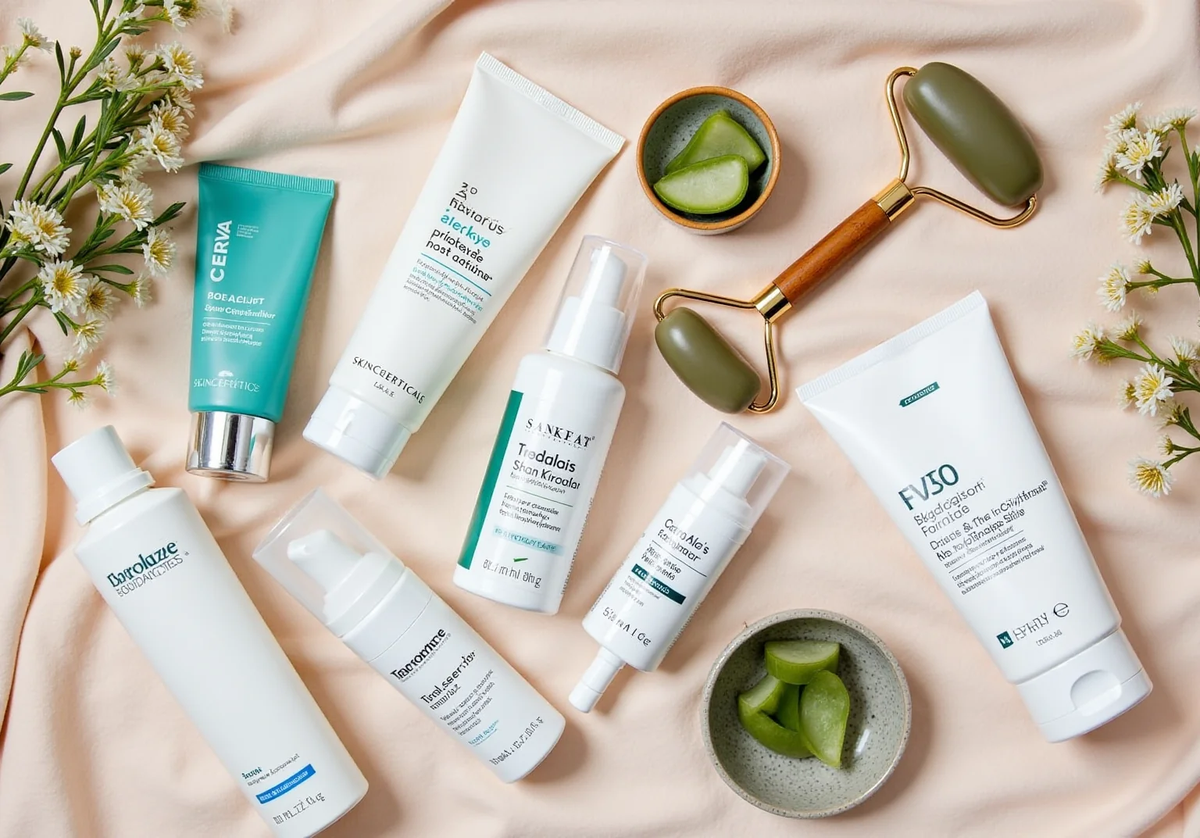
A dermatologically tested label can provide useful information, but it should be considered one part of a larger evaluation.
What Does “Dermatologically Tested” Mean?
In simple terms, “dermatologically tested” generally indicates that a product has been evaluated for its effects on skin under a dermatological testing process.
However, the phrase does not have one universal meaning that applies to every skin care product in the same way.
Testing can be designed to evaluate different things. A manufacturer may test whether a product is well tolerated, whether it causes visible irritation under specific conditions, or whether users report certain reactions.
The important point is that testing is not the same as a guarantee.
A product can pass a particular test and still cause irritation or an allergic reaction in an individual consumer.
Does Dermatologically Tested Mean Dermatologist Approved?
No.
This is one of the most important differences consumers should understand.
“Dermatologically tested” does not automatically mean:
Also Read: Does Mixsoon Centella Cleansing Foam Really Help Clean and Soothe Skin?
- A dermatologist recommends the product
- A dermatologist personally selected the ingredients
- A dermatologist guarantees the product
- The product is suitable for every skin type
- The product is medically necessary
- The product has been approved as a treatment for a skin disease
Testing and recommendation are different concepts.
A dermatologist may be involved in a testing process, but consumers should not assume that the phrase means a dermatologist endorses the product for everyone.
Why Do Companies Test Skin Care Products?
Skin care products are designed to remain on or interact with the skin. Because the skin is a living barrier, companies need to understand how products may behave when used as directed.
Testing can help companies evaluate factors such as:
- Skin tolerance
- Irritation
- Redness
- Dryness
- Stinging
- Sensitivity
- User reactions
- Product performance under specific conditions
Testing may also help manufacturers identify problems before products reach a wider market.
However, no testing program can predict every possible reaction in every individual.
People have different skin types, medical histories, allergies, medications, environments, and personal habits. These differences can influence how a product feels and behaves on the skin.
How Are Dermatologically Tested Skin Care Products Evaluated?
The exact process depends on the product and the company.
A typical evaluation may involve applying a product to the skin of a group of participants under controlled conditions. Researchers or qualified professionals may then observe the skin and collect information about possible reactions.
Testing may focus on:
Skin Irritation
Irritation can include redness, burning, itching, dryness, or discomfort.
Skin Tolerance
A product may be evaluated to see how well people tolerate it during a defined period of use.
User Experience
Participants may report how a product feels, including whether it causes tightness, stinging, or discomfort.
Specific Skin Concerns
Some products may be tested with particular populations or under particular conditions, depending on their intended use.
The testing method matters because a small, short-term study does not provide the same information as a large, carefully designed study involving many different skin types.
Is Dermatologically Tested the Same as Hypoallergenic?
No.
These terms should not be treated as interchangeable.
“Hypoallergenic” generally suggests that a product is formulated to have a lower likelihood of causing an allergic reaction. But it does not mean that an allergic reaction is impossible.
Likewise, a dermatologically tested product can still cause an allergic reaction in someone who is sensitive to one of its ingredients.
Consumers should therefore read the ingredient list instead of relying only on marketing terms.
Can Dermatologically Tested Products Cause Irritation?
Yes.
Even products that have been dermatologically tested can cause irritation.
Common reasons include:
- Individual allergies
- Sensitive skin
- Overuse
- Using too many active ingredients
- Damaged skin barriers
- Fragrance sensitivity
- Strong exfoliating ingredients
- High concentrations of certain ingredients
- Mixing products that do not work well together
- Using a product more often than directed
A product that works well for one person may not work well for another.
This is normal in skin care and is one reason personal testing should be approached carefully.
Dermatologically Tested Skin Care Products for Sensitive Skin
People with sensitive skin often pay close attention to testing claims.
Sensitive skin may react more easily to environmental conditions or cosmetic ingredients. Some people experience temporary redness, dryness, burning, or itching after using certain products.
When shopping for sensitive skin, consider products that are:
- Simple in formulation
- Fragrance-free when fragrance is a concern
- Gentle enough for regular use
- Appropriate for the intended area of the body
- Supported by clear ingredient information
- Easy to introduce gradually
A “dermatologically tested” claim may be useful, but it should not be your only selection factor.
Start With a Small Area
When trying a new product, introduce it carefully rather than applying several new products at once.
Using one new product at a time makes it easier to understand how your skin responds.
If significant irritation develops, stop using the product and seek professional medical advice when appropriate.
Why the Skin Barrier Matters
The skin barrier is the outer protective layer of the skin. It helps reduce water loss and protects the body from outside environmental factors.
When the skin barrier is weakened, the skin may feel:
- Dry
- Tight
- Rough
- Irritated
- Sensitive
- Uncomfortable
Using too many strong products can sometimes make these problems worse.
A simple routine that protects the skin barrier is often more useful than a complicated routine containing many active ingredients.
Important Ingredients to Look For
Dermatologically tested skin care products can contain many different ingredients. The right ingredients depend on the product and your skin goals.
Here are several common ingredient groups.
Ceramides
Ceramides are lipids naturally found in the skin. They are commonly used in moisturizers designed to support the skin barrier.
Hyaluronic Acid
Hyaluronic acid is a humectant that helps attract and hold water. It is widely used in hydrating skin care products.
Glycerin
Glycerin is another common humectant. It helps support skin hydration and is found in many cleansers and moisturizers.
Niacinamide
Niacinamide is a form of vitamin B3 used in many skin care products. It may support the skin barrier and can be included in products designed for several common skin concerns.
Vitamin C
Vitamin C is an antioxidant ingredient used in many facial serums. Formulations can vary significantly in stability, concentration, and skin tolerance.
Retinoids
Retinoids are vitamin A-related ingredients. They are used in various skin care and dermatological treatments, but some can cause dryness or irritation, especially when first introduced.
Salicylic Acid
Salicylic acid is commonly used in products designed for acne-prone or oily skin. It can be useful for some people but may cause dryness or irritation if overused.
Alpha Hydroxy Acids
Ingredients such as glycolic acid and lactic acid belong to the alpha hydroxy acid family. They are commonly used for exfoliation and improving the appearance of skin texture.
Because exfoliating acids can increase irritation when used too often, gradual introduction is important.
Dermatologically Tested Moisturizers
Moisturizer is one of the simplest and most useful parts of a basic skin care routine.
A moisturizer can help reduce dryness and support the skin’s protective barrier.
Different formulations may include:
- Humectants
- Emollients
- Occlusives
- Ceramides
- Glycerin
- Hyaluronic acid
The best moisturizer depends on your skin type and personal needs.
For Dry Skin
Creams and thicker moisturizers may be more comfortable.
For Oily Skin
Light lotions or gel-based products may feel better.
For Combination Skin
You may prefer different textures on different areas of the face.
For Sensitive Skin
A simple, fragrance-free moisturizer may be easier to tolerate.
Dermatologically Tested Facial Cleansers
A cleanser removes substances such as excess oil, sweat, makeup, sunscreen, and environmental debris.
A good cleanser does not need to leave your face feeling extremely tight or “squeaky clean.”
That tight feeling can sometimes indicate that the cleanser is too harsh for your skin.
When choosing a cleanser, consider:
- Your skin type
- Whether you wear makeup
- Whether your skin is sensitive
- Whether the product contains potentially irritating ingredients
- How frequently you plan to use it
Gentle cleansing is usually more important than creating a very strong cleansing effect.
Dermatologically Tested Sunscreen
Sunscreen is an important part of daily skin protection.
Broad-spectrum sunscreen helps protect skin from ultraviolet radiation. In the United States, consumers should pay attention to the sunscreen’s SPF and broad-spectrum labeling.
For daily use, choose a sunscreen that you are comfortable applying in the amount and frequency needed for meaningful protection.
Important considerations include:
- SPF
- Broad-spectrum protection
- Water resistance when appropriate
- Skin type
- Texture
- Whether it works well under makeup
- Whether it causes irritation around the eyes
Sunscreen is particularly important when spending time outdoors.
What Does SPF Mean?
SPF stands for Sun Protection Factor.
It is primarily related to protection against UVB radiation and is not a complete description of a sunscreen’s protection.
For broader protection, look for products labeled broad spectrum.
Remember that sunscreen is only one part of sun protection. Shade, protective clothing, and avoiding intense midday sun can also help reduce UV exposure.
Dermatologically Tested Products for Acne-Prone Skin
Acne-prone skin can be difficult to manage because aggressive treatment can sometimes cause more irritation.
Common ingredients in acne-focused skin care include:
- Salicylic acid
- Benzoyl peroxide
- Adapalene
- Niacinamide
Not every acne product is appropriate for every person.
If acne is persistent, painful, severe, or causing scars, professional medical evaluation may be more useful than continually trying new cosmetic products.
A dermatologist can help determine whether you need prescription treatment or a specific skin care plan.
Dermatologically Tested Products for Aging Skin
Many consumers use skin care products to address visible signs of aging.
Common concerns include:
- Fine lines
- Uneven skin tone
- Dryness
- Rough texture
- Loss of firmness
- Sun-related discoloration
Common ingredients include retinoids, vitamin C, niacinamide, peptides, moisturizers, and sunscreen.
However, product claims should be viewed realistically.
No cosmetic product can stop biological aging. Good skin care is better understood as a way to support skin health and improve certain visible concerns.
Daily sun protection remains one of the most important long-term habits for maintaining healthy-looking skin.
Dermatologically Tested Products and Fragrance
Fragrance is an important consideration for people who experience sensitivity.
Fragrance ingredients are used to make products smell pleasant, but some people may develop irritation or allergic contact dermatitis from particular fragrance ingredients.
If fragrance has caused problems for you before, consider fragrance-free products and read the ingredient list carefully.
Do not assume that “natural fragrance” automatically means irritation-free.
Natural ingredients can also cause allergic reactions.
Natural Does Not Always Mean Safer
The word “natural” is frequently used in skin care marketing.
But natural and synthetic ingredients can both be safe or irritating depending on the ingredient, concentration, formulation, and individual user.
For example, botanical extracts and essential oils may sound gentle because they come from plants, but some can irritate sensitive skin.
A better approach is to evaluate the complete formulation rather than deciding based only on whether ingredients are natural.
How to Read a Skin Care Product Label
Learning to read labels is one of the best ways to become a smarter skin care consumer.
Look for:
Ingredient List
Ingredients are generally listed in descending order of predominance, subject to labeling rules and exceptions.
Also Read: Good Skin Care Products for Combination Skin: A Complete Guide to Building the Right Routine
Directions
Follow the recommended method and frequency of use.
Warnings
Read warnings carefully, especially for active ingredients and sunscreens.
Net Quantity
This helps you compare product sizes.
Manufacturer Information
Clear company information can make it easier to contact the manufacturer if you have questions or concerns.
Product Claims
Marketing claims should be considered alongside the ingredient list and available evidence.
What Should Consumers Ask About “Dermatologically Tested”?
If a product uses this phrase, useful questions include:
- Who conducted the test?
- How many participants were involved?
- What type of test was performed?
- What was the test designed to measure?
- How long were participants exposed to the product?
- Were people with sensitive skin included?
- Was the study independent?
- Are the testing details publicly available?
Companies do not always provide every detail on the package. However, these questions help consumers understand why a label claim should not be interpreted as an absolute safety guarantee.
Dermatologically Tested vs. Clinically Tested
These terms can sound similar, but they are not necessarily identical.
“Dermatologically tested” usually focuses on skin-related testing.
“Clinically tested” can refer more broadly to testing under controlled clinical conditions, although the exact meaning depends on the product and claim.
Neither phrase automatically means that a product is universally effective or safe.
The testing method, study design, participants, measurements, and results matter more than the marketing phrase alone.
Dermatologically Tested vs. Dermatologist Recommended
These are also different.
A dermatologist recommendation is a professional opinion based on a person’s needs, skin condition, medical history, and other factors.
A testing claim describes a product evaluation.
If you have a specific skin condition, professional advice is more valuable than choosing a product simply because its package says “dermatologically tested.”
How to Choose Dermatologically Tested Skin Care Products
Choosing a product becomes easier when you follow a simple process.
Step 1: Identify Your Skin Type
Think about whether your skin is mainly:
- Dry
- Oily
- Combination
- Normal
- Sensitive
Skin type can change over time because of age, climate, hormones, medications, and other factors.
Step 2: Identify Your Main Goal
Do you want to improve:
- Dryness?
- Acne?
- Sun protection?
- Uneven tone?
- Rough texture?
- Fine lines?
- General hydration?
Choose products based on your actual goal.
Step 3: Keep the Routine Simple
You usually do not need ten products.
A basic routine can include:
- Cleanser
- Moisturizer
- Sunscreen during the day
Additional products can be added based on specific needs.
Step 4: Introduce Products Slowly
Adding several products at the same time makes it difficult to identify which product caused a reaction.
Introduce one major new product at a time whenever possible.
Step 5: Follow Directions
More product does not necessarily mean better results.
Using an active ingredient more often than directed can increase irritation.
A Simple Skin Care Routine for Beginners
A beginner-friendly routine can be very simple.
Morning
Cleanse if needed.
Apply moisturizer if your skin needs it.
Apply broad-spectrum sunscreen.
Evening
Cleanse the skin.
Apply a treatment product if you use one.
Finish with moisturizer.
This basic structure works as a starting point for many people. The exact products should be adjusted according to skin type and individual needs.
Common Mistakes to Avoid
Even good products can cause problems when used incorrectly.
Using Too Many Active Ingredients
Combining multiple strong products can increase irritation.
Changing Products Too Often
Skin care results can take time. Constantly switching products can make it difficult to know what works.
Skipping Sunscreen
Using expensive serums while ignoring sun protection can undermine your overall routine.
Scrubbing Too Hard
Physical scrubbing can irritate the skin, especially when the skin barrier is already sensitive.
Ignoring Irritation
Persistent burning, swelling, severe redness, or other concerning symptoms should not be ignored.
Trusting Marketing Alone
Terms such as “dermatologically tested,” “natural,” “clean,” or “premium” do not replace careful evaluation.
Does a Higher Price Mean Better Skin Care?
No.
Price is not a reliable measure of product quality.
A low-cost moisturizer with a simple, effective formulation may work very well for one person, while an expensive product may not suit that person’s skin.
Instead of focusing only on price, consider:
- Ingredients
- Formulation
- Skin compatibility
- Evidence
- Product purpose
- Ease of regular use
- Sun protection when relevant
Consistency is often more valuable than buying the most expensive product available.
Can Dermatologically Tested Products Be Used by Children?
Not automatically.
Children’s skin and skin care needs can differ from those of adults.
Parents and caregivers should consider the child’s age, the product’s intended use, ingredient list, and any relevant medical advice.
Products designed specifically for adults should not automatically be assumed to be appropriate for young children.
If a child has an ongoing skin problem, consult a pediatrician or dermatologist.
Can Pregnant People Use All Skin Care Products?
No.
Some skin care ingredients require special consideration during pregnancy.
Because pregnancy can change skin sensitivity and certain treatments may not be appropriate, people who are pregnant or trying to become pregnant should discuss specific ingredients with a qualified health professional.
Do not rely solely on a “dermatologically tested” label to determine whether a product is appropriate during pregnancy.
What If a Product Causes a Reaction?
If a new skin care product causes significant irritation, stop using it.
If the reaction is mild, the skin may improve after avoiding the suspected product.
More serious symptoms, such as significant swelling, widespread hives, breathing problems, or rapidly worsening symptoms, require urgent medical attention.
If reactions repeatedly occur with skin care products, a dermatologist or other qualified healthcare professional can help identify possible causes.
Patch Testing and New Products
People who are concerned about sensitivity may consider testing a new product on a small area of skin before wider use.
This can provide some information about tolerance, but it is not a perfect guarantee.
A person can tolerate a product during a small test and still experience problems after broader or repeated application.
If you have a history of significant allergic reactions, professional medical guidance is more appropriate than relying only on personal testing.
The Importance of Product Storage
Even a well-tested product can deteriorate if stored incorrectly.
Pay attention to:
- Expiration information
- Period-after-opening information when provided
- Temperature
- Direct sunlight
- Moisture
- Container cleanliness
Some products are particularly sensitive to heat, light, or air.
Store products according to the manufacturer’s instructions.
Do Dermatologically Tested Products Expire?
Yes.
Cosmetic products can change over time.
Ingredients may become less stable, preservatives may become less effective, and the product’s texture or smell may change.
Do not continue using a product simply because it was expensive.
If the product has passed its recommended use period or has clearly changed in appearance, smell, or texture, replacing it may be appropriate.
How E-E-A-T Applies to Skin Care Information
E-E-A-T stands for Experience, Expertise, Authoritativeness, and Trustworthiness.
These principles are especially important for skin care because consumers may use online information to make health-related decisions.
Reliable skin care information should:
- Explain claims clearly
- Avoid exaggerated promises
- Separate cosmetics from medical treatments
- Recognize individual differences
- Encourage professional care for serious concerns
- Avoid claiming that one product works for everyone
- Explain limitations of testing
- Use clear and understandable language
Trustworthy content should help readers make informed decisions rather than push them toward a particular purchase.
How to Spot Misleading Skin Care Claims
Some claims may sound impressive but provide little useful information.
Be cautious with statements such as:
- “Works for everyone”
- “Zero risk”
- “Guaranteed results”
- “Instantly reverses aging”
- “Completely chemical-free”
- “Dermatologist approved” without supporting details
- “100% safe for sensitive skin”
Skin is complex, and absolute claims are often unrealistic.
A better product description explains what the product is designed to do and what limitations may exist.
Are Dermatologically Tested Skin Care Products Worth Considering?
Yes, but the phrase should be placed in context.
Testing can provide useful information about how a product performed under specific conditions.
Also Read: How to Hide Dark Spots on Face? Easy Makeup and Skincare Tips
However, consumers should also consider:
- Ingredients
- Skin type
- Product purpose
- Evidence behind individual claims
- Instructions
- Potential allergens
- Personal history of reactions
- Professional advice when needed
The strongest buying decision usually comes from looking at the entire picture rather than one phrase on the package.
Frequently Asked Questions About Dermatologically Tested Skin Care Products
1. How long does it take for dermatologically tested skin care products to show results?
The answer depends on the product and the skin concern. Moisturizers may improve the feeling of dryness relatively quickly, while products targeting acne, uneven tone, or fine lines may require consistent use over a longer period. Testing does not mean that results will appear immediately.
2. Can I use two dermatologically tested skin care products together?
You may be able to use multiple products together, but the fact that each product was tested does not guarantee that the combination will be suitable. Pay particular attention when combining exfoliating acids, retinoids, acne treatments, or other active ingredients. Introduce products gradually and monitor your skin.
3. Does dermatologically tested mean a product is suitable for eczema-prone skin?
No. A dermatologically tested label does not automatically mean that a product is appropriate for eczema-prone skin. People with eczema or recurring skin inflammation may need products selected with guidance from a dermatologist or other qualified healthcare professional.
4. Can a dermatologically tested product cause an allergic reaction months later?
Yes. Allergic reactions can sometimes develop after repeated exposure. Previous tolerance does not guarantee that a person will never become sensitized to an ingredient. New or persistent reactions should be discussed with a healthcare professional.
5. Should I stop using a dermatologically tested product if it burns?
If a product causes significant or persistent burning, it is sensible to stop using it rather than assuming that the sensation means the product is working. Strong reactions, swelling, blistering, or other concerning symptoms warrant professional medical attention.
Final Thoughts on Dermatologically Tested Skin Care Products
Dermatologically tested skin care products can be a useful option for consumers who want products that have undergone skin-related evaluation. However, the phrase “dermatologically tested” should never be treated as a universal guarantee of safety, effectiveness, or dermatologist approval.
The most useful approach is to look at the complete product story.
Understand your skin type. Identify your main skin concern. Read the ingredient list. Follow product directions. Introduce new products carefully. Protect your skin from excessive sun exposure. And seek professional advice when you have persistent, severe, or unusual skin problems.
A simple routine is often enough to build a strong foundation. Cleanser, moisturizer, and sunscreen can cover many basic needs, while targeted treatments can be added when there is a clear reason to use them.
Ultimately, good skin care is less about finding a magical label and more about choosing suitable products, using them consistently, and paying attention to how your own skin responds.