
How to Manage Money and Save More Every Month
May 6, 2026
Good Face Products for Sensitive Skin: A Simple Guide to Choosing Gentle, Effective Skincare
August 28, 2026
Skincare treatment is not about having the largest collection of beauty products. It is about understanding what your skin needs and choosing safe, effective steps that support its health over time. A good skincare treatment plan can help with common concerns such as acne, dryness, oily skin, dark spots, uneven skin tone, fine lines, wrinkles, rough texture, and sensitivity.
Today, people in the United States have access to thousands of skincare products and professional treatments. There are cleansers, moisturizers, serums, retinoids, exfoliants, sunscreens, chemical peels, lasers, microneedling, facials, and many other options. This variety can be helpful, but it can also make skincare confusing.
The most important idea is that effective skincare does not have to be complicated. In many cases, a simple routine that includes gentle cleansing, moisturizing, and daily sun protection can provide a strong foundation. Specific treatments can then be added when a particular skin concern needs more attention. The American Academy of Dermatology recommends tailoring skincare to your skin type and using products in a way that reduces irritation.
This guide explains what skincare treatment means, how to build a routine, which ingredients may help different concerns, when professional treatment may be useful, and how to avoid common mistakes.
What Is Skincare Treatment?
Skincare treatment refers to the products, habits, and professional procedures used to maintain or improve the condition and appearance of the skin.
It can involve everyday care at home or treatment provided by a qualified healthcare professional.
Everyday skincare may include:
- Gentle cleansing
- Moisturizing
- Sunscreen
- Acne treatments
- Retinol or other retinoids
- Antioxidant products
- Exfoliation
- Products for dark spots
- Products for dry or sensitive skin
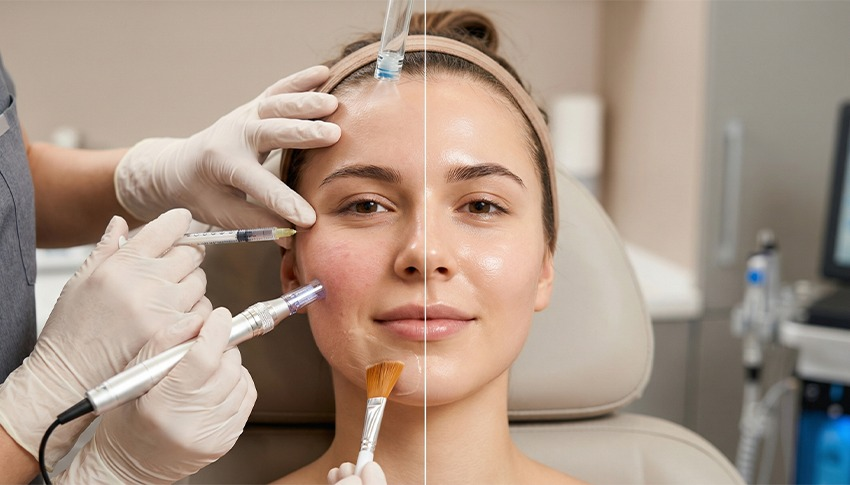
Professional skincare treatment may include:
- Chemical peels
- Microneedling
- Laser treatments
- Prescription medications
- Dermatologist-directed acne treatment
- Treatment for pigmentation disorders
- Procedures for scars and certain signs of aging
The right approach depends on the problem being treated. A product that works well for oily acne-prone skin may be too drying for someone with sensitive or dry skin.
This is why the goal should not simply be to find the strongest skincare product. The goal is to find an appropriate treatment that your skin can tolerate and that addresses the actual concern.
Why a Good Skincare Treatment Plan Matters
Your skin is more than something you see in the mirror. It is a protective barrier that helps protect the body from the outside environment.
A healthy skin barrier helps retain water and reduces unnecessary irritation. When the barrier becomes damaged, skin may become dry, rough, itchy, red, or more sensitive.
A thoughtful skincare routine can help support this barrier.
It can also help manage common cosmetic and dermatologic concerns. For example, acne treatments can help reduce clogged pores and inflammation, while sunscreen can help reduce UV-related skin damage. Retinoids may help with acne and certain signs of skin aging. Moisturizers can reduce dryness and can also improve tolerance of some acne treatments.
The key is consistency.
Using a complicated routine for a few days and then stopping usually makes less sense than following a simple routine consistently for months.
The Basic Skincare Routine Everyone Should Understand
A basic skincare routine does not need ten or fifteen steps.
For many people, a strong starting point is:
- Cleanser
- Treatment product if needed
- Moisturizer
- Sunscreen during the daytime
The order matters because skincare products are generally applied from cleansing to treatment and then moisturizing and sun protection. The American Academy of Dermatology recommends cleansing first, applying medication or treatment, then moisturizer and/or sunscreen, followed by makeup if desired.
Morning Skincare Routine
A simple morning routine can look like this:
Cleanse gently if your skin needs cleansing.
Apply a targeted treatment if you use one, such as vitamin C or another dermatologist-recommended product.
Apply moisturizer if needed.
Finish with broad-spectrum sunscreen with SPF 30 or higher.
If you wear makeup, apply it after your skincare products.
The exact routine can change depending on your skin type.
Nighttime Skincare Routine
Nighttime skincare can be even simpler.
Start with a gentle cleanser.
Apply your treatment product.
Use moisturizer.
If you have been prescribed a medication, follow your healthcare professional’s instructions instead of creating your own treatment schedule.
Night is often a useful time for products such as retinoids because many are commonly used in evening routines.
How to Choose a Skincare Treatment for Your Skin Type
Understanding your skin type can make product selection much easier.
Dry Skin
Dry skin may feel tight, rough, flaky, or uncomfortable.
People with dry skin often benefit from gentle cleansing and regular moisturizing.
Look for moisturizers designed to support the skin barrier. Ingredients such as ceramides, glycerin, hyaluronic acid, and petrolatum can be useful depending on the product and individual needs.
Avoid excessive cleansing and aggressive exfoliation because these can make dryness worse.
The American Academy of Dermatology recommends applying moisturizer to damp skin because this helps trap water in the skin.
Oily Skin
Oily skin produces more sebum and may look shiny, especially around the forehead, nose, and chin.
Oily skin still needs moisturizer.
A common mistake is trying to remove all oil from the skin with harsh cleansers. This can lead to dryness and irritation without solving the underlying problem.
Look for lightweight, non-comedogenic products when clogged pores are a concern.
Combination Skin
Combination skin may be oily in some areas and dry in others.
The best approach may be to avoid treating the entire face exactly the same way.
For example, a person may use a lightweight moisturizer across the face while paying extra attention to dry areas.
Sensitive Skin
Sensitive skin may sting, burn, become red, or feel irritated after using certain products.
A simple routine is often better.
Choose gentle products and introduce new active ingredients slowly.
Fragrance can irritate some people, so fragrance-free products may be worth considering if sensitivity is a recurring issue.
Acne-Prone Skin
Acne-prone skin needs special attention because some products can clog pores or cause irritation.
Look for products labeled non-comedogenic or designed for acne-prone skin.
Acne treatment may include ingredients such as benzoyl peroxide, salicylic acid, azelaic acid, and topical retinoids. Current American Academy of Dermatology acne guidelines support several of these treatments depending on the type and severity of acne.
Skincare Treatment for Acne
Acne is one of the most common reasons people seek skincare treatment.
It can involve blackheads, whiteheads, pimples, deeper inflammatory lesions, and sometimes acne scars.
Acne develops through a combination of factors involving oil production, clogged pores, inflammation, and other biological processes.
The best acne treatment depends on the type and severity of acne.
Benzoyl Peroxide
Benzoyl peroxide is a widely used acne treatment.
It can reduce acne-causing bacteria and inflammation.
It may be available without a prescription in the United States in various formulations.
However, benzoyl peroxide can cause dryness and irritation, especially when someone starts using it too frequently.
Starting gradually and using moisturizer can help improve tolerance.
Salicylic Acid
Salicylic acid is another common acne ingredient.
It helps exfoliate the skin and can help unclog pores.
It is found in cleansers, leave-on treatments, pads, and other products.
Because it can be drying, using multiple strong acne products at the same time may create unnecessary irritation.
Retinoids
Topical retinoids are important acne treatments.
They help prevent pores from becoming clogged and can reduce inflammation.
Examples include adapalene, tretinoin, tazarotene, and trifarotene. Some are prescription treatments, while adapalene is also available over the counter in the United States.
Retinoids can also help improve skin texture and some signs of aging.
Azelaic Acid
Azelaic acid can be useful for acne and may also help with discoloration left after acne.
This makes it interesting for people dealing with both breakouts and dark marks.
When Acne Needs a Dermatologist
You should consider professional medical care if acne is painful, severe, leaving scars, not improving with reasonable over-the-counter treatment, or affecting your confidence and daily life.
A dermatologist can determine whether prescription treatments are appropriate.
For moderate or severe acne, treatment may involve combinations of topical medicines, oral medications, hormonal therapy, or other approaches.
Skincare Treatment for Dry Skin
Dry skin treatment focuses on restoring comfort and supporting the skin barrier.
A useful routine may include a gentle cleanser, moisturizer, and daily sun protection.
You may also need to reduce products that cause irritation.
Very hot water can make dry skin feel worse. Long, hot showers may remove some of the oils that help support the skin barrier.
Moisturizer is particularly important after cleansing.
For persistent or severe dryness, it is important to consider whether an underlying skin condition is present. Conditions such as eczema and psoriasis can cause significant dryness and may need medical treatment rather than cosmetic skincare alone.
Skincare Treatment for Dark Spots and Hyperpigmentation
Dark spots can appear after acne, inflammation, sun exposure, hormonal changes, or certain skin conditions.
This is often called hyperpigmentation.
Treatment depends on the cause.
Sun protection is one of the most important parts of managing discoloration because UV exposure can worsen pigmentation.
Some skincare ingredients may also help improve uneven skin tone.
These can include:
- Vitamin C
- Retinoids
- Azelaic acid
- Certain exfoliating acids
- Other dermatologist-recommended pigment treatments
The best treatment is not necessarily the strongest one.
Aggressive treatment can cause irritation, and irritation may sometimes make discoloration more difficult to manage.
This is especially important for people who develop dark marks easily after inflammation.
Skincare Treatment for Fine Lines and Wrinkles
Aging is a normal part of life, and no skincare product can completely stop it.
However, skincare can help improve the appearance and protect the skin from preventable damage.
The foundation is sun protection.
Dermatologists commonly recommend broad-spectrum sunscreen with SPF 30 or higher, especially when spending time outdoors. Sunscreen helps protect against UV radiation, which contributes to sunburn, premature skin aging, and skin cancer.
Moisturizer is another useful foundation.
Well-moisturized skin can look smoother and may make fine lines less noticeable.
Retinoids are among the most studied topical ingredients for acne and signs of skin aging.
Retinol is a type of retinoid commonly found in over-the-counter products, while stronger retinoids may require a prescription.
Because retinoids can cause dryness and irritation, they should not automatically be introduced at the highest possible frequency.
The Importance of Sunscreen in Skincare Treatment
Sunscreen deserves special attention because many skincare goals become harder to achieve without sun protection.
You can use expensive serums and professional treatments, but regular UV exposure can continue contributing to pigmentation and premature skin aging.
Look for a sunscreen that provides broad-spectrum protection.
Broad-spectrum sunscreen protects against both UVA and UVB radiation.
For many everyday situations, dermatologists recommend SPF 30 or higher.
When outdoors, sunscreen generally needs to be reapplied, especially after swimming or sweating. The FDA also explains that SPF should not be interpreted simply as the number of hours you can stay in the sun. Solar exposure changes with factors such as time of day, location, and intensity of sunlight.
Other forms of sun protection matter too.
These include:
- Seeking shade
- Wearing protective clothing
- Wearing a wide-brimmed hat
- Using sunglasses
- Avoiding unnecessary intense sun exposure
Sunscreen is not only an anti-aging product. It is an important part of skin health.
How to Use Retinol and Retinoids Safely
Retinol has become extremely popular because of its connection with smoother-looking skin, improved texture, pigmentation concerns, and signs of aging.
But more is not always better.
Retinoids can cause dryness, peeling, redness, and irritation.
A practical approach is to introduce a retinoid gradually.
Use a small amount as directed by the product label or healthcare professional.
If irritation develops, reduce frequency or speak with a dermatologist.
Moisturizer can also help improve comfort.
People with significant skin redness, inflammation, or certain skin conditions should speak with a dermatologist before starting a retinoid.
If you are pregnant, trying to become pregnant, or breastfeeding, ask your healthcare professional about whether a particular retinoid is appropriate before using it.
Vitamin C in Skincare Treatment
Vitamin C is an antioxidant commonly used in skincare.
It is often included in products designed to improve the appearance of uneven skin tone and protect skin from environmental stress.
Many people use vitamin C in the morning before moisturizer and sunscreen.
However, vitamin C products vary significantly in formulation and stability.
A product that irritates your skin is not necessarily better.
If you have sensitive skin, introduce new products carefully.
Moisturizer Is Important Even for Oily Skin
One of the most common skincare myths is that oily skin does not need moisturizer.
This is not necessarily true.
Acne treatments such as benzoyl peroxide, salicylic acid, adapalene, tretinoin, and other medications can dry or irritate the skin.
A suitable moisturizer can improve comfort and help people continue their acne treatment.
For acne-prone skin, look for products labeled non-comedogenic when appropriate. The American Academy of Dermatology notes that moisturizers can help reduce dryness caused by common acne treatments.
Chemical Peels as a Skincare Treatment
Chemical peels are professional treatments that use a chemical solution to remove controlled layers of skin.
They may be used for concerns such as certain types of acne, uneven pigmentation, rough texture, fine lines, sun damage, and some other cosmetic concerns.
The strength and depth of a peel can vary.
A superficial peel may have less downtime than a deeper peel, while stronger treatments can have greater risks and recovery needs.
Chemical peels are not simply beauty treatments that anyone should perform without training.
The American Academy of Dermatology warns that some at-home chemical peels have caused serious injuries and recommends that chemical peels be used under the supervision of a licensed, trained provider.
Microneedling for Skin Texture and Scars
Microneedling uses very small needles to create controlled micro-injuries in the skin.
The goal is to stimulate the body’s healing response and collagen production.
It is commonly used for acne scars, surgical scars, injury scars, and certain texture concerns.
Radiofrequency microneedling combines microneedling with radiofrequency energy.
A dermatologist can determine whether microneedling is appropriate for your skin and concern.
The skill of the provider matters.
Poor technique, inappropriate settings, or inadequate aftercare can increase the risk of complications.
Laser Skin Treatments
Laser and light-based treatments can be used for several cosmetic and medical skin concerns.
Depending on the technology, they may target pigmentation, blood vessels, scars, hair, wrinkles, or skin texture.
However, “laser treatment” is not one single procedure.
Different lasers have different wavelengths, depths, purposes, and risks.
Skin tone also matters when choosing a treatment because some procedures carry a higher risk of pigmentation changes in certain patients.
A qualified dermatologist should evaluate your skin before treatment and explain realistic expectations.
Facial Treatments and Professional Facials
Professional facials can include cleansing, exfoliation, extraction, masks, moisturizers, and other steps.
They may leave the skin feeling temporarily smoother or refreshed.
However, a facial is not always the best treatment for a medical skin condition.
For example, persistent acne, rosacea, severe pigmentation, eczema, suspicious moles, or significant scarring may require medical evaluation.
The important question is not simply whether a facial feels good.
The better question is whether the treatment is appropriate for your skin and your goal.
Skincare Treatment for Sensitive Skin
Sensitive skin requires a slower approach.
Avoid changing several products at once.
If you introduce a cleanser, serum, exfoliant, retinoid, and moisturizer all in the same week, it becomes difficult to know which product is causing irritation.
Instead, introduce one major change at a time.
Keep the rest of the routine simple.
A gentle cleanser, moisturizer, and sunscreen can provide a useful foundation.
If your skin frequently burns, stings, becomes very red, or develops a rash, consult a dermatologist rather than repeatedly trying new products.
How to Build a Skincare Routine Step by Step
A good routine should be realistic.
Step 1: Identify Your Main Skin Concern
Do not try to solve everything at once.
Ask yourself what matters most.
Is it acne?
Dryness?
Dark spots?
Wrinkles?
Redness?
Uneven texture?
Choose one main concern first.
Step 2: Create a Simple Foundation
Start with:
- Gentle cleanser
- Moisturizer
- Sunscreen
Give your skin time to adjust.
Step 3: Add One Targeted Treatment
Once the basic routine feels comfortable, add one active ingredient for your main concern.
This may be a retinoid for acne or signs of aging, salicylic acid for clogged pores, or another appropriate ingredient.
Step 4: Monitor Your Skin
Pay attention to:
- Redness
- Burning
- Peeling
- Dryness
- New breakouts
- Itching
- Improvement
Your skin is giving you information.
Step 5: Adjust Instead of Adding More
If your skin becomes irritated, adding another product is usually not the answer.
Sometimes removing a product is more helpful.
How Long Does Skincare Treatment Take to Work?
Skincare usually requires patience.
A moisturizer can make dry skin feel better relatively quickly.
Acne treatment can take longer.
Dark spots may require weeks or months to improve.
Retinoid-based skincare also requires consistent use.
Professional treatments may produce faster visible changes, but they may also involve downtime and risks.
A realistic skincare plan focuses on gradual improvement rather than overnight transformation.
Be cautious of products that promise perfect skin in a few days.
Healthy skin is a long-term process.
Common Skincare Mistakes to Avoid
Using Too Many Products
More products do not automatically mean better results.
Too many active ingredients can irritate the skin.
The American Academy of Dermatology specifically notes that using multiple anti-aging products within a short period can irritate the skin and make signs of aging more noticeable.
Scrubbing Too Hard
Scrubbing aggressively does not make skin healthier.
It can cause irritation and damage the skin barrier.
Dermatologists recommend gentle cleansing rather than harsh scrubbing.
Skipping Sunscreen
This can undermine many other skincare goals.
Daily sun protection should be treated as a basic part of skincare rather than an optional extra.
Picking Acne
Squeezing pimples can increase inflammation and may increase the risk of marks and scars.
Changing Products Too Quickly
If you change your routine every few days, you may never give a product enough time to work.
Copying Someone Else’s Routine
A skincare routine that works for a celebrity, influencer, friend, or family member may not work for you.
Skin differs from person to person.
Using Strong Products Because They Feel Powerful
Burning, peeling, or extreme dryness does not mean a product is working better.
Irritation is often a sign that your skin needs a different approach.
Skincare Treatment for Different Age Groups
Skincare needs can change throughout life.
Teenagers
Teen skin often deals with increased oil production and acne.
A basic routine can include gentle cleansing, moisturizer, sunscreen, and an appropriate acne treatment.
Teenagers generally do not need a cabinet full of anti-aging products.
The American Academy of Dermatology warns that using too many products or harsh ingredients too early can cause irritation.
Adults in Their 20s and 30s
Adults may focus on acne, dark spots, prevention of sun damage, and early signs of aging.
Sunscreen remains important.
Retinoids may be useful for appropriate individuals.
Adults in Their 40s and Beyond
Concerns about dryness, pigmentation, fine lines, wrinkles, and loss of skin firmness may become more noticeable.
Moisturizer, sunscreen, and targeted treatments can form the foundation.
Professional treatment may be considered when appropriate.
Skincare Treatment for Men
Men can benefit from the same basic skincare principles.
A simple routine can include:
- Gentle cleanser
- Moisturizer
- Sunscreen
- Targeted treatment when needed
Shaving can create additional irritation.
Using a gentle shaving product and avoiding aggressive pressure may help.
Men should also pay attention to suspicious changes in moles or skin growths and seek medical evaluation when appropriate.
Skincare is not limited by gender.
Healthy skin needs protection and appropriate care regardless of who you are.
Skincare Treatment on a Budget
Good skincare does not require luxury products.
A budget-friendly routine can be highly effective when it focuses on the basics.
Spend your money strategically.
A reasonable priority is:
- Sunscreen
- Moisturizer
- Gentle cleanser
- One targeted treatment
Expensive packaging does not automatically mean better results.
Look at the ingredients, formulation, purpose, and how well the product fits your skin.
The American Academy of Dermatology also recommends practical budget-friendly skincare habits such as gentle cleansing, moisturizing, sun protection, and choosing products suited to your skin type.
When You Should See a Dermatologist
Skincare products are useful, but they cannot solve every skin problem.
See a dermatologist if you have:
- Severe or painful acne
- Acne scars
- A rash that does not improve
- Persistent redness
- Severe dryness
- Unexplained itching
- Rapidly changing skin lesions
- A mole that changes in size, shape, or color
- Persistent pigmentation
- Skin infections
- A concern that repeatedly returns
A dermatologist can identify conditions that may look similar but require different treatments.
Professional evaluation is especially important before major cosmetic procedures.
The American Academy of Dermatology recommends asking questions about who will perform a cosmetic procedure, their training and experience, possible side effects, expected results, and whether your skin has a higher risk of complications.
How to Choose a Professional Skincare Treatment
Before booking a procedure, ask:
Who will perform it?
What training do they have?
What is the treatment designed to improve?
How many treatments might be needed?
What are the possible side effects?
How long is recovery?
What happens if there is a complication?
Is the procedure appropriate for my skin tone?
What should I do before and after treatment?
What results are realistic?
These questions can help you make a safer decision.
Do not choose a procedure only because it is trending online.
Professional Skincare Treatment vs At-Home Skincare
At-home skincare is best for daily maintenance.
Professional treatment may be appropriate when a concern requires stronger intervention or medical expertise.
For example, a person with mild dryness may only need a good moisturizer.
A person with severe acne may need prescription treatment.
Someone with acne scars may benefit from a dermatologist discussing microneedling, laser treatment, chemical peels, or other options.
The smartest approach is not to choose professional treatment simply because it sounds more advanced.
Choose the least complicated treatment that can reasonably achieve your goal.
A Practical Skincare Treatment Plan
For someone who wants a straightforward routine, the following framework is a useful starting point.
Morning
Cleanse gently if needed.
Apply a targeted product if appropriate.
Apply moisturizer.
Apply broad-spectrum SPF 30 or higher.
Evening
Cleanse gently.
Apply your treatment product.
Apply moisturizer.
Weekly
Do not automatically add multiple exfoliation treatments.
Instead, evaluate how your skin is responding.
If your skin is comfortable, continue.
If it is irritated, simplify the routine.
Every Few Months
Review your skin concerns.
Ask whether your products are still appropriate.
Replace expired products.
Consider seeing a dermatologist if a concern is persistent.
The Biggest Skincare Insight: Consistency Beats Complexity
One of the most useful conclusions from modern skincare advice is that consistency matters more than having a complicated routine.
A person who consistently uses sunscreen, moisturizer, and an appropriate treatment product may achieve better long-term results than someone who buys ten products but uses them inconsistently.
Skin does not need constant experimentation.
It needs appropriate care.
The best skincare treatment plan is therefore one that is:
Simple enough to follow.
Gentle enough to tolerate.
Specific enough to address your concern.
Consistent enough to produce gradual results.
Flexible enough to change when your skin changes.
What to Do If a Skincare Product Irritates Your Skin
If a product causes burning, significant redness, swelling, rash, or severe discomfort, stop and reassess.
Do not assume that irritation means the product is working.
Return to a simple routine if necessary.
A gentle cleanser and moisturizer may be enough while your skin recovers.
If symptoms are severe, persistent, or worsening, seek medical advice.
People taking certain prescription medications may need to avoid specific skincare ingredients. For example, the American Academy of Dermatology advises people taking isotretinoin to avoid several potentially irritating products, including topical retinol, exfoliating acids, and some other active ingredients unless their dermatologist advises otherwise.
How to Get Better Results From Skincare Treatment
The following habits can make a skincare routine more effective.
Use products consistently.
Apply products in the correct order.
Avoid unnecessary irritation.
Protect your skin from UV exposure.
Give treatments enough time.
Do not introduce several strong ingredients simultaneously.
Choose products based on your skin type.
Pay attention to changes in your skin.
Seek professional care when home treatment is not enough.
Most importantly, have realistic expectations.
Skincare can improve many concerns, but it cannot completely change your genetics or stop natural aging.
Frequently Asked Questions About Skincare Treatment
1. Can skincare treatment completely remove pores?
No. Pores are normal structures in human skin and cannot be permanently removed. However, keeping pores clear and controlling excess oil can make them appear less noticeable. Ingredients such as salicylic acid and retinoids may help with clogged pores when they are appropriate for the individual.
2. Is natural skincare always safer than regular skincare?
No. Natural does not automatically mean gentle or safe. Some natural ingredients can irritate the skin or cause allergic reactions. What matters is the ingredient, concentration, formulation, and how your individual skin responds.
3. Can drinking more water cure dry skin?
Drinking enough water is important for general health, but simply drinking extra water is not a complete treatment for dry skin. Dry skin often needs direct care through gentle cleansing, moisturizer, and protection from environmental factors.
4. Can skincare treatments permanently prevent wrinkles?
No skincare routine can permanently stop natural aging. However, consistent sun protection and appropriate skincare can help reduce the appearance of some signs of aging and protect skin from preventable UV-related damage.
5. Is professional skincare treatment worth the cost?
It depends on the treatment and the problem. Professional procedures can be useful for specific concerns such as acne scars, pigmentation, wrinkles, or certain texture problems. But a professional procedure is not automatically better than basic home skincare. A dermatologist can help determine whether the expected benefit justifies the cost, downtime, and possible risks.
Final Thoughts
Skincare treatment works best when it is based on your actual skin needs rather than trends. A strong foundation is usually simple: cleanse gently, moisturize appropriately, protect your skin from the sun, and use a targeted treatment when you have a specific concern. Acne may need ingredients such as benzoyl peroxide, salicylic acid, azelaic acid, or retinoids, while pigmentation and signs of aging may require a different strategy. Professional options such as chemical peels, microneedling, and laser treatments can be helpful for selected concerns, but they should be approached carefully and performed by appropriately trained professionals.
The most important skincare lesson is that healthy skin is built through consistent, appropriate care rather than an endless number of products. Give your routine time, avoid unnecessary irritation, use sun protection, and get professional advice when a skin problem is persistent, severe, or difficult to identify. A personalized and realistic approach will usually serve you better than chasing every new skincare trend.