

Does Hyaluronic Acid Eye Cream Reduce Fine Lines?
August 29, 2026
Cleanser for Combination Skin: A Complete Guide to Choosing the Right Face Cleanser
August 30, 2026
Finding the best face wash cleanser for oily skin can feel harder than it should be. Some cleansers leave the face feeling fresh but dry and tight. Others remove surface oil but seem to leave behind residue. The right cleanser should help remove excess oil, sunscreen, makeup, sweat, dirt, and other daily buildup without unnecessarily damaging the skin barrier.
For people with oily skin, cleansing is an important part of a simple skin-care routine. However, more cleansing is not always better. A cleanser that is too harsh can cause irritation and dryness, while an overly rich or poorly matched formula may feel heavy.
This guide explains what to look for in an oily-skin cleanser, which ingredients can be useful, how often to wash your face, how to choose between different cleanser types, and how to build a practical routine. The goal is not to identify one universal “best” product, but to help you choose a cleanser based on your skin’s needs.
What Is the Best Face Wash Cleanser for Oily Skin?
The best face wash cleanser for oily skin is generally a gentle cleanser that removes excess sebum, sweat, dirt, sunscreen, and other surface buildup without leaving the skin excessively dry, tight, or irritated.
A good oily-skin cleanser may contain ingredients such as salicylic acid, niacinamide, or mild cleansing agents. However, the best formula depends on whether your skin is simply oily or also sensitive, acne-prone, dehydrated, or easily irritated.
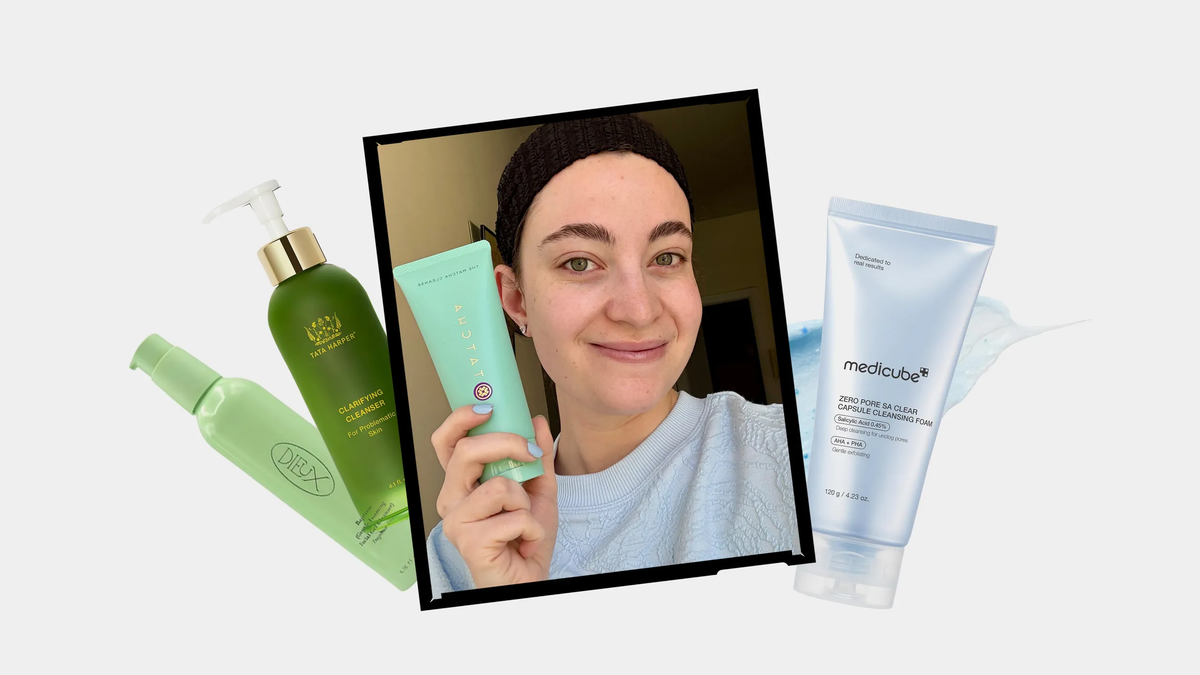
When choosing a cleanser, look for:
- A gentle cleansing formula
- A texture that feels comfortable on your skin
- Non-comedogenic labeling when appropriate
- Salicylic acid if clogged pores are a concern
- Fragrance-free options if your skin is sensitive
- Ingredients that support rather than excessively strip the skin barrier
- A formula that rinses clean without leaving a tight feeling
The most important point is simple: oily skin still needs a healthy skin barrier.
Why Does Oily Skin Need a Face Wash?
Oily skin produces more sebum than many other skin types. Sebum is an oily substance made by the sebaceous glands. It helps protect the skin, but excess sebum can contribute to a shiny appearance and may mix with dead skin cells and other debris.
Daily cleansing can remove substances that accumulate on the skin, including:
- Excess oil
- Sweat
- Dirt
- Sunscreen
- Makeup
- Airborne particles
- Dead skin cells
- Product residue
Cleansing is particularly useful at night because several products and environmental substances may remain on the skin throughout the day.
However, the purpose of cleansing is not to remove every trace of oil. Some natural lipids are important for maintaining the skin barrier.
How Does a Cleanser for Oily Skin Work?
Facial cleansers contain ingredients called surfactants that help loosen substances from the skin so they can be rinsed away with water.
Oil and water do not naturally mix well. Surfactants help bridge that difference by interacting with oily substances and water.
A cleanser may therefore help remove:
- Surface sebum
- Sweat
- Dirt and particles
- Cosmetic residue
- Sunscreen
- Other substances that accumulate during the day
The formula matters because different surfactants and supporting ingredients can produce very different experiences.
A cleanser designed for oily skin should clean effectively without creating unnecessary irritation.
What Should You Look for in the Best Face Wash Cleanser for Oily Skin?
There is no single ingredient that automatically makes a cleanser the best choice. Instead, consider the complete formula and how your skin responds to it.
1. Salicylic Acid
Salicylic acid is a beta hydroxy acid, commonly called BHA. It is oil-soluble, which allows it to work within the oily environment of pores.
It is often used in products designed for:
- Oily skin
- Blackheads
- Whiteheads
- Clogged pores
- Acne-prone skin
A salicylic acid cleanser can be useful when excess oil and clogged pores are major concerns.
However, it is not automatically better than a gentle cleanser. Some people may experience dryness or irritation, particularly if they use several active ingredients at the same time.
2. Niacinamide
Niacinamide is a form of vitamin B3 commonly used in skin-care products.
It can be found in many formulas designed for oily or combination skin. Niacinamide is also associated with supporting the skin barrier and improving the appearance of uneven skin over time.
Because cleanser contact time is short, do not expect a wash-off cleanser to produce the same results as a leave-on treatment containing niacinamide.
3. Gentle Surfactants
Surfactants are necessary for most traditional face washes, but their formulation matters.
A cleanser that leaves your skin feeling painfully tight or squeaky after washing may be too aggressive for your particular skin.
Instead, look for a product that leaves the skin clean and comfortable.
4. Fragrance-Free Formulas
Fragrance is not necessarily harmful for everyone. However, people with sensitive or easily irritated skin may prefer fragrance-free products.
If your skin frequently becomes red, itchy, burning, or uncomfortable after cleansing, a simpler formula may be easier to tolerate.
5. Non-Comedogenic Products
“Non-comedogenic” generally means the product is formulated or tested with the goal of reducing the likelihood of clogged pores.
This label can be useful for people with acne-prone skin, although it should not be treated as a guarantee that a product will never cause breakouts.
Everyone’s skin can respond differently.
What Is the Best Deep Cleansing Face Wash for Oily Skin?
The best deep cleansing face wash for oily skin should remove excess oil and buildup effectively without causing excessive dryness or irritation.
The phrase “deep cleansing” can be misleading. Your face does not necessarily need an extremely strong cleanser to become properly clean.
A better approach is to consider what you actually want to remove.
If your main concern is excess sebum, a suitable foaming cleanser may be enough.
If you regularly wear sunscreen or makeup, you may need a more thorough cleansing routine at night.
If clogged pores are your primary concern, salicylic acid may be more relevant than simply choosing the strongest-feeling cleanser.
If your skin feels tight after washing, increasing cleansing strength may make the problem worse.
Gel vs. Foaming vs. Cream Cleanser for Oily Skin
Different cleanser textures can work for oily skin. Texture alone does not determine whether a cleanser is effective.
Gel Cleansers
Gel cleansers often have a lightweight feel and are popular among people with oily or combination skin.
They may be useful for someone who wants:
- A fresh feeling
- A lightweight formula
- Effective removal of surface oil
- A cleanser suitable for warm or humid weather
A gel cleanser can be a good everyday option if it does not leave the skin dry.
Foaming Cleansers
Foaming cleansers can be effective at removing excess oil.
They may appeal to people who prefer a more noticeable cleansing sensation. However, some foaming formulas can be too drying for sensitive or dehydrated skin.
The goal should be comfortable cleansing, not maximum foam.
Cream Cleansers
Cream cleansers are often associated with dry or sensitive skin, but some people with oily skin can still use them.
This can be particularly useful when oily skin is also dehydrated or irritated.
Skin type is not always one-dimensional. Someone can have oily skin and still experience dryness.
Can Oily Skin Be Dehydrated?
Yes. Oiliness and hydration are different concepts.
Oil refers primarily to sebum and lipids. Hydration refers to water content in the skin.
A person can therefore have:
- Oily and well-hydrated skin
- Oily and dehydrated skin
- Dry and dehydrated skin
- Combination skin with different conditions in different areas
If your face is shiny but also feels tight, uncomfortable, or flaky, using an increasingly harsh cleanser may not be the best solution.
Instead, consider reducing aggressive cleansing and using a lightweight moisturizer.
How Often Should You Wash Oily Skin?
For many people, cleansing the face twice daily can be reasonable: once in the morning and once at night.
However, more frequent washing is not automatically better.
Washing repeatedly throughout the day can contribute to dryness or irritation in some people.
After exercise or heavy sweating, rinsing or cleansing may be appropriate depending on the situation.
Your routine should match your lifestyle and your skin’s tolerance.
Should You Wash Your Face in the Morning?
For people with oily skin, morning cleansing can help remove oil and sweat that accumulated overnight.
A gentle cleanser may be useful if you wake up with a noticeably oily face.
However, people with sensitive skin may sometimes prefer a simple water rinse in the morning and a proper cleanse at night.
There is no requirement that every person follow exactly the same routine.
Should You Wash Your Face at Night?
Yes, nighttime cleansing is particularly important if you have worn sunscreen, makeup, or other skin-care products during the day.
Night cleansing can help remove daily buildup before applying your nighttime products.
A simple routine is often sufficient:
- Remove makeup when necessary.
- Cleanse the face gently.
- Rinse thoroughly.
- Pat dry with a clean towel.
- Apply appropriate skin-care products.
How to Wash an Oily Face Correctly
Even a good cleanser can become irritating if it is used too aggressively.
Follow these steps:
Step 1: Wash Your Hands
Clean hands help prevent unnecessary transfer of dirt and bacteria to your face.
Step 2: Wet Your Face
Use lukewarm water rather than very hot water.
Step 3: Apply a Small Amount of Cleanser
You generally do not need a large amount.
Step 4: Massage Gently
Use your fingertips and gentle circular movements.
Avoid aggressive scrubbing.
Step 5: Rinse Thoroughly
Make sure cleanser residue is removed.
Step 6: Pat Dry
Use a clean towel and gently pat rather than rubbing aggressively.
Step 7: Moisturize
Apply a suitable moisturizer after cleansing.
If you are cleansing in the morning, finish with sunscreen.
Why Is My Face Still Oily After Washing?
Some oiliness after cleansing is normal.
Your skin naturally produces sebum, so a cleanser cannot permanently stop oil production.
If your face becomes oily again shortly after washing, several factors may be involved:
- Natural sebum production
- Hormonal changes
- Genetics
- Climate
- Humidity
- Stress
- Skin-care products
- Irritation
- Over-cleansing
Trying to remove every trace of oil can lead to a cycle in which the skin becomes uncomfortable or irritated without actually solving the underlying issue.
Does a Stronger Cleanser Reduce Oil Better?
Not necessarily.
A stronger cleanser may remove more surface oil temporarily, but that does not mean it will provide better long-term results.
If a cleanser damages the skin barrier or causes significant dryness, you may experience irritation and discomfort.
A better question is:
“Does this cleanser remove enough oil and buildup while leaving my skin comfortable?”
That is a more useful measure of cleanser quality.
Best Face Wash Cleanser for Oily Skin and Acne
Oily skin and acne frequently occur together, but they are not the same condition.
For people concerned about acne, a salicylic acid cleanser may be useful because salicylic acid can help with clogged pores.
Some people may also use benzoyl peroxide products as part of an acne routine. However, benzoyl peroxide can be drying and may not be appropriate as an everyday facial cleanser for everyone.
If acne is persistent, painful, severe, or causing scars, it is better to consult a dermatologist rather than continually changing cleansers.
Best Face Wash Cleanser for Oily and Sensitive Skin
Oily and sensitive skin can be difficult to balance.
You may need enough cleansing to remove excess oil without causing irritation.
Consider:
- Fragrance-free formulas
- Gentle surfactants
- Short cleansing time
- Lukewarm water
- No harsh scrubs
- A lightweight moisturizer
Introduce one new product at a time when possible. This makes it easier to determine what is helping or irritating your skin.
Best Face Wash Cleanser for Oily Skin With Large Pores
Pores are normal structures in human skin, and their appearance is influenced by genetics, oil production, age, and other factors.
A cleanser cannot permanently “close” pores.
However, keeping excess oil and pore-clogging buildup under control may make pores appear less noticeable.
Salicylic acid is one ingredient commonly used for this purpose.
Avoid products that promise to permanently shrink or erase pores.
Best Face Wash Cleanser for Oily Skin With Blackheads
Blackheads are open comedones. They occur when material within a pore becomes exposed to air and develops a dark appearance.
The dark color is not simply dirt.
For blackhead-prone skin, ingredients such as salicylic acid may be helpful.
Gentle cleansing is also important, but a cleanser alone may not completely eliminate persistent blackheads.
Common Mistakes When Cleansing Oily Skin
Many people unintentionally make oily skin harder to manage by overdoing their routine.
Washing Too Many Times
Frequent washing can cause dryness and irritation.
Using Very Hot Water
Hot water may feel relaxing, but it can be uncomfortable for the skin and contribute to dryness.
Scrubbing Hard
Physical scrubbing does not necessarily make oily skin cleaner.
Using Too Many Active Ingredients
Combining several exfoliating or acne-focused products can increase irritation.
Skipping Moisturizer
Oily skin still needs hydration.
Changing Products Too Quickly
Skin care often requires consistency. Changing products every few days makes it difficult to understand what works.
Do Oily Skin Types Need Moisturizer?
Yes.
Oily skin still needs moisture.
Choose a lightweight moisturizer that feels comfortable and does not leave you excessively greasy.
Gel or lotion textures may be appealing to people who dislike heavy creams.
The right moisturizer can support the skin barrier while allowing you to maintain a simple routine.
Does Oily Skin Need Sunscreen?
Yes.
Daily sunscreen is an important part of skin care.
People with oily skin may prefer lightweight, non-greasy, gel, fluid, or matte-finish sunscreens.
Look for broad-spectrum sunscreen with an SPF appropriate for your needs.
If sunscreen makes your face feel excessively oily, changing the sunscreen formula may be more helpful than trying to cleanse your skin more aggressively.
How to Build a Simple Oily Skin Routine
A basic routine does not need dozens of products.
Morning
- Gentle cleanser
- Lightweight moisturizer
- Broad-spectrum sunscreen
Evening
- Cleanser
- Treatment product if needed
- Lightweight moisturizer
If you use makeup or water-resistant sunscreen, you may need a more thorough removal step before cleansing.
How Long Should You Use a New Cleanser?
There is no universal waiting period for a cleanser to “work.”
A cleanser primarily performs its job during washing by removing surface substances.
If you are evaluating whether a cleanser suits your skin, pay attention to how your skin feels after repeated use.
Useful signs include:
- No excessive tightness
- No persistent burning
- No unusual redness
- Adequate removal of oil
- Comfortable skin after washing
- No obvious increase in irritation
Do not continue using a product simply because you believe your skin needs to “adjust” if you are experiencing significant irritation.
What Ingredients Should Oily Skin Avoid?
There is no universal list of ingredients that every person with oily skin must avoid.
Instead, identify ingredients that repeatedly cause problems for you.
If your skin is sensitive, you may want to be cautious with heavily fragranced products.
If your skin becomes excessively dry, reconsider very aggressive cleansing formulas or frequent use of strong exfoliating ingredients.
The ingredient list should be considered together with the product’s concentration, formulation, and intended use.
Are Natural Face Washes Better for Oily Skin?
Not necessarily.
“Natural” does not automatically mean safer, gentler, or more effective.
Some natural ingredients can irritate sensitive skin.
Likewise, a synthetic ingredient is not automatically harmful simply because it is synthetic.
When choosing a cleanser, focus on evidence, formulation, tolerability, and your individual skin needs rather than relying only on marketing terms.
Is a Fragrance-Free Cleanser Better?
For sensitive skin, fragrance-free products may be a sensible choice.
For people who tolerate fragrance well, a fragranced cleanser may not necessarily cause problems.
However, fragrance provides little cleansing benefit. Therefore, if your main goal is minimizing potential irritation, a fragrance-free formula can simplify your routine.
Can You Use the Same Face Wash Every Day?
Yes, if your skin tolerates it well.
A daily cleanser does not need to create dramatic sensations. In fact, a cleanser that feels boring may be a very good choice if it consistently removes daily buildup without irritation.
There is usually little reason to rotate multiple cleansers unless you have a specific purpose for doing so.
What Is the Difference Between a Cleanser and a Face Wash?
The terms “cleanser” and “face wash” are often used interchangeably.
In general, “face wash” often describes a cleanser with a lighter or foaming texture, while “facial cleanser” is a broader term that includes gels, creams, lotions, oils, balms, and foaming products.
Marketing terminology varies by brand.
The more important factors are the formula, cleansing ability, ingredients, and how your skin responds.
Can Oily Skin Use an Oil Cleanser?
Yes.
An oil cleanser can help dissolve oil-based substances such as makeup and sunscreen.
This may be particularly useful as the first step of a double-cleansing routine.
However, double cleansing is not mandatory for everyone.
If a single gentle cleanser effectively removes your daily products, there may be no need to add another cleansing step.
What Is Double Cleansing?
Double cleansing usually involves two cleansing steps.
The first step is often an oil-based cleanser or balm.
The second step is generally a water-based cleanser.
The purpose is to improve removal of makeup, sunscreen, and other products.
Double cleansing can be useful for some people, especially at night, but it can also be unnecessary or irritating if performed excessively.
Is Micellar Water Good for Oily Skin?
Micellar water can be useful for removing makeup, sunscreen, and surface residue.
Some formulas are designed for sensitive skin, while others may be more appropriate for different skin types.
If you use micellar water as a makeup-removal step, you may still choose to cleanse afterward depending on the product and your routine.
How Climate Can Affect Oily Skin
Where you live can influence how oily your skin feels.
Warm and humid weather may increase sweating and make the face appear shinier.
Cold, dry weather can create a different problem. Skin may become dry or irritated even if it remains naturally oily.
This means the best face wash cleanser for oily skin in summer may not feel ideal during winter.
Your routine can change with the season.
How to Choose a Cleanser When Shopping in the United States
American shoppers have access to a very large range of facial cleansers.
When comparing products, do not choose solely based on:
- Popularity
- Packaging
- Influencer recommendations
- “Deep clean” claims
- Price
- Number of ingredients
- Celebrity endorsements
Instead, consider:
- Your skin type
- Your primary concern
- Your sensitivity level
- The cleanser’s active ingredients
- How frequently you plan to use it
- Whether you already use other active products
- How your skin reacts after cleansing
How Much Should You Spend on a Face Wash?
A higher price does not automatically mean a better cleanser.
Cleansers are wash-off products, meaning they spend a relatively short period on your skin.
A reasonably priced product can work very well if its formula is suitable for you.
It can be more useful to invest strategically in products that remain on the skin, such as sunscreen or certain treatments, while choosing a cleanser based primarily on tolerability and function.
When Should You See a Dermatologist?
Consider professional advice if you experience:
- Persistent acne
- Painful or deep breakouts
- Significant redness
- Severe dryness
- Persistent itching
- Burning
- Recurrent rashes
- Skin infections
- Acne scars
- A sudden unexplained change in your skin
A dermatologist can help determine whether your concern is simply oily skin or something requiring targeted treatment.
How to Tell If Your Cleanser Is Too Harsh
Your cleanser may be too harsh if you repeatedly notice:
- Tightness immediately after washing
- Burning
- Stinging
- Flaking
- Persistent redness
- Increased sensitivity
- A rough or uncomfortable feeling
A temporary clean sensation is different from persistent irritation.
Your face should not feel painfully dry simply because you washed it.
What Does “Squeaky Clean” Really Mean?
“Squeaky clean” is often used in skin-care marketing to describe a strong cleansing sensation.
But that sensation is not a reliable measurement of skin health.
If your skin feels unusually tight after cleansing, the product may be removing more than you need.
Healthy cleansing should balance cleanliness with comfort.
How Diet and Lifestyle Relate to Oily Skin
Skin oil production is influenced by multiple biological and environmental factors.
Genetics and hormones can play major roles.
Lifestyle factors such as stress, sleep, climate, and product use may also influence how your skin behaves.
However, it is generally too simplistic to blame oily skin on one specific food or lifestyle habit.
A balanced approach is more useful than extreme restrictions.
Can Washing Your Face Stop Oily Skin?
No.
Cleansing removes oil from the surface of the skin, but it does not permanently stop sebaceous glands from producing sebum.
That is why your skin can become oily again after washing.
The purpose of cleansing is to manage surface buildup, not to eliminate natural oil production.
Featured Snippet: Quick Guide to Choosing a Cleanser for Oily Skin
If you need a quick answer, use this checklist:
- Choose a gentle cleanser that removes excess oil without excessive dryness.
- Consider salicylic acid if clogged pores or blackheads are a major concern.
- Choose fragrance-free products if your skin is sensitive.
- Avoid aggressive scrubbing.
- Wash your face about twice daily if your skin tolerates it.
- Use moisturizer even if your skin is oily.
- Wear broad-spectrum sunscreen during the day.
- See a dermatologist for persistent or severe acne and irritation.
People Also Ask: Best Face Wash Cleanser for Oily Skin
What face wash is best for very oily skin?
A gentle gel or foaming cleanser may work well for very oily skin. If clogged pores are also a concern, a cleanser containing salicylic acid may be worth considering. The ideal product should reduce surface oil without causing excessive tightness or irritation.
Is salicylic acid or a gentle cleanser better for oily skin?
It depends on your goal. A gentle cleanser is suitable for basic daily cleansing, while salicylic acid may provide an additional benefit for clogged pores and some types of acne. Some people can use both types at different times or alternate them.
How many times should oily skin be washed?
Many people can cleanse twice a day, typically morning and evening. Washing substantially more often is not necessarily better and may cause irritation or dryness.
Is foaming face wash good for oily skin?
A foaming cleanser can be useful for oily skin because it can effectively remove surface oil. However, some formulas may be too drying. Choose based on how your skin feels after use rather than foam level alone.
Should oily skin use moisturizer after face wash?
Yes. Oily skin can still become dehydrated or irritated. A lightweight moisturizer can help support the skin barrier without necessarily making the face feel greasy.
Five Additional FAQs About Oily Skin Cleansers
1. Can oily skin use a cleanser with hyaluronic acid?
Yes. Hyaluronic acid is commonly used as a hydrating ingredient and can appear in cleansers as well as leave-on products. Its presence does not make a cleanser unsuitable for oily skin. However, because cleansers are rinsed away, the hydration benefits may be less significant than those from a leave-on moisturizer or serum.
2. Should teenagers with oily skin use the same cleanser as adults?
Not necessarily. Teenagers can have oily and acne-prone skin, but the ideal routine should remain simple. A gentle cleanser is often a reasonable starting point. If acne is persistent or severe, professional medical advice is more appropriate than continually adding stronger products.
3. Can oily skin use a face wash containing essential oils?
It can, but people with sensitive skin may prefer to avoid unnecessary fragrance components. Essential oils are not required for effective cleansing, and some can cause irritation in susceptible individuals.
4. Is cold water better than warm water for washing an oily face?
There is no strong reason to rely on very cold water to control oil production. Lukewarm water is generally a comfortable choice for facial cleansing. Extremely hot water can be drying and uncomfortable.
5. Can changing face wash frequently cause breakouts?
Frequently changing products can make it difficult to identify what is irritating your skin. If a new cleanser causes irritation, dryness, or breakouts, consider stopping it rather than repeatedly switching between several products. A consistent, simple routine is often easier to evaluate.
A Practical Oily Skin Cleanser Checklist
Before purchasing the best face wash cleanser for oily skin for your needs, ask:
Does it match my skin?
Your face may be oily, but it may also be sensitive, acne-prone, dehydrated, or combination.
Does it solve my actual problem?
Choose based on whether your main concern is oil, clogged pores, acne, makeup removal, sunscreen removal, or sensitivity.
Is it comfortable?
A cleanser should not leave persistent burning or uncomfortable tightness.
Am I already using strong treatments?
If you already use exfoliating acids or acne medications, adding another strong active cleanser may increase irritation.
Can I use it consistently?
The best cleanser is one that fits comfortably into your routine and that you can use appropriately over time.
The Most Important Insight: “Strong” Does Not Mean “Best”
One of the biggest misunderstandings about oily skin is the idea that the strongest cleanser must be the most effective.
That is not necessarily true.
A cleanser has a specific job: remove unwanted surface substances.
Once the skin is adequately cleansed, additional stripping does not automatically produce better skin.
In fact, excessive cleansing can make your routine harder to manage.
The better goal is balance.
Clean enough to remove daily buildup, gentle enough to protect comfort, and simple enough to use consistently.
Final Thoughts on the Best Face Wash Cleanser for Oily Skin
The best face wash cleanser for oily skin is not necessarily the product with the strongest foam, the longest ingredient list, or the most aggressive “deep cleaning” claim.
A good choice should match your individual skin needs.
For basic oily skin, a gentle gel or foaming cleanser may be enough. For oily skin with clogged pores, a salicylic acid cleanser may be useful. For oily and sensitive skin, a fragrance-free, gentle formula may be more appropriate.
Most importantly, avoid treating oiliness as something that must be completely removed. Sebum has a natural role in the skin. The objective of cleansing is to manage excess surface oil and buildup while maintaining a healthy skin barrier.
A simple routine can often be effective: cleanse appropriately, moisturize, protect your skin from the sun, and use targeted treatments only when you actually need them. If acne or irritation remains persistent, a dermatologist can provide advice tailored to your skin.
When comparing the many options available in the United States, focus less on marketing promises and more on formulation, skin tolerance, ingredients, and your specific concerns. That approach is more reliable than searching for one universal cleanser that is supposedly perfect for everyone.